
Not every tow needs the same kind of truck.
Sometimes a standard tow setup may work. Other times, your vehicle needs a flatbed tow truck because it is damaged, low to the ground, all-wheel drive, electric, stuck in park, missing a wheel, or unsafe to tow with wheels on the road.
If you are stuck in Los Angeles and unsure what to request, this guide will help you understand when flatbed towing is the safer choice.
Quick Answer
A car usually needs a flatbed tow truck when all four wheels should stay off the road during transport.
That may be the right choice if your vehicle is:
- AWD or 4WD
- Severely damaged after an accident
- Unable to roll
- Missing a wheel
- Stuck in park or stuck in gear
- Low to the ground
- Electric or hybrid
- A luxury, exotic, classic, or performance vehicle
- A motorcycle or scooter
- Going a longer distance
- At risk of scraping, tire wear, transmission damage, or suspension damage
If you want careful transport, flatbed towing in Los Angeles is often the safer option.
What Is a Flatbed Tow Truck?
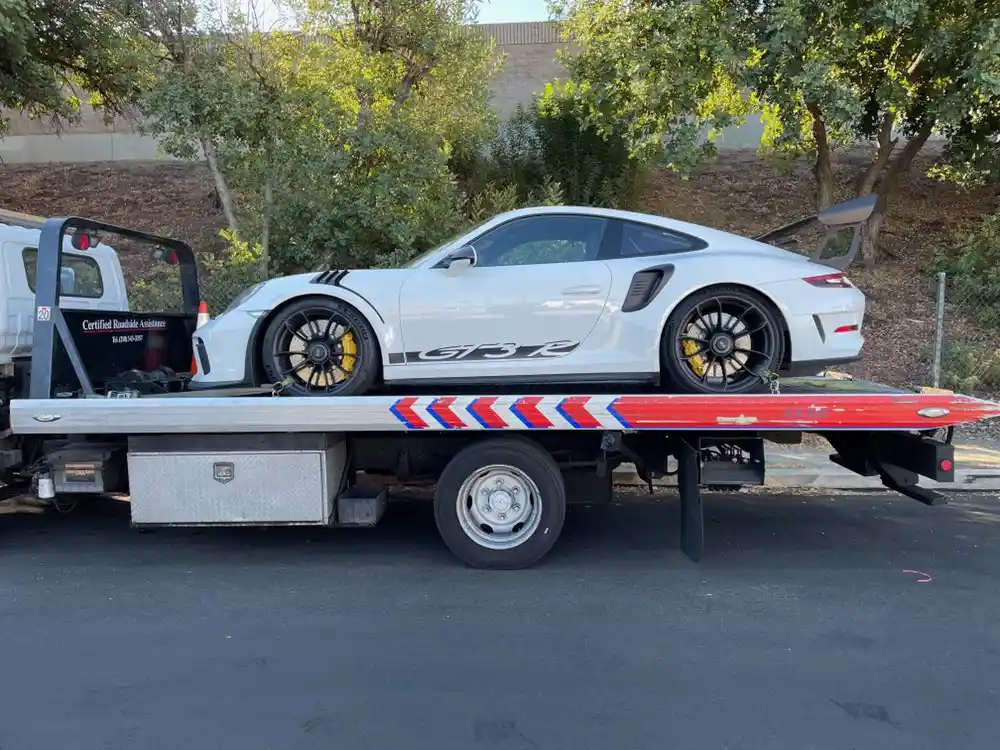
A flatbed tow truck has a long platform bed. The bed tilts down, and the vehicle is pulled or driven onto it.
Once loaded, the vehicle sits fully on the truck. The tires do not roll on the road during the tow.
That is the main difference between flatbed towing and other towing methods.
With some tow trucks, two wheels may stay on the road. With a flatbed, the whole vehicle rides on the truck bed.
This helps reduce risk to the transmission, tires, suspension, drivetrain, bumper, and undercarriage.
Flatbed Towing vs. Regular Towing
A regular tow setup may be fine for some short local tows when the vehicle is in good condition and can roll safely.
A flatbed tow truck is usually better when the vehicle needs extra protection.
Here is the simple difference:
- Wheel-lift towing lifts one end of the vehicle and leaves the other wheels on the road.
- Flatbed towing carries the whole vehicle on the truck bed.
Flatbed towing is often preferred when road contact could cause extra damage.
If you are not sure which truck you need, tow truck service in Los Angeles can help match the towing method to the vehicle’s condition, location, and distance.
When the Vehicle Is AWD or 4WD
Many all-wheel drive and four-wheel drive vehicles should not be towed with two wheels rolling on the road.
These vehicles have drivetrain systems that can be damaged if the wrong wheels move during towing.
A flatbed tow truck keeps all four wheels off the ground. That can help protect the:
- Transmission
- Transfer case
- Drivetrain
- Differentials
- Tires
- Suspension
A flatbed may be the safer choice for:
- AWD sedans
- AWD crossovers
- 4WD SUVs
- 4WD trucks
- Performance vehicles
- Some luxury vehicles
- Vehicles with complex drivetrain systems
If you are not sure, check the owner’s manual or tell the tow provider your vehicle make, model, and drivetrain.
When in doubt, flatbed towing is usually safer for AWD and 4WD vehicles.
When Your Car Was in an Accident
A car often needs a flatbed tow truck after an accident.
Even if the damage looks small, the vehicle may not be safe to drive. The wheels, suspension, steering, brakes, bumper, or frame may be affected.
A flatbed may be safer after a crash if:
- The wheels are bent
- The tires are damaged
- The bumper is loose
- The suspension looks uneven
- Fluid is leaking
- The vehicle will not shift
- Warning lights stay on
- The car pulls to one side
- The vehicle cannot roll safely
- The frame or undercarriage may be damaged
If the car was in a collision, do not guess. If driving could make the damage worse, request accident towing in Los Angeles and explain the damage clearly.
When the Vehicle Is Severely Damaged or Inoperable
A flatbed is often needed when the vehicle is too damaged to roll, steer, or shift safely.
This can happen after a crash, suspension failure, wheel damage, brake lockup, axle damage, or mechanical failure.
A vehicle may be inoperable if:
- A wheel is bent
- A tire is shredded
- A wheel is missing
- The brakes are locked
- The axle is damaged
- The suspension collapsed
- The vehicle is stuck in park
- The steering does not work
- The vehicle cannot roll straight
- The car cannot be driven safely
If the vehicle cannot move safely, do not force it.
A flatbed tow truck may be needed to load and transport the car with less risk.
When the Vehicle Is Stuck in Park or Stuck in Gear
A car may need a flatbed if it cannot shift out of park or gear.
This can happen because of a dead battery, transmission issue, brake switch problem, shifter problem, electronic fault, or accident damage.
A flatbed may be needed if:
- The car is stuck in park
- The vehicle cannot enter neutral
- The wheels will not move
- The transmission may be damaged
- The parking brake will not release
- The vehicle cannot roll onto a normal tow setup
Tell the tow provider if the vehicle cannot shift.
That one detail can change the type of truck and loading method needed.
H2: When the Vehicle Is Low to the Ground
Low vehicles often need careful loading.
A car with low ground clearance can scrape when it goes up a steep ramp, driveway, curb, or truck bed angle. This matters for sports cars, exotic cars, luxury cars, modified vehicles, and some EVs.
A flatbed may be needed if your car has:
- A low front bumper
- Low side skirts
- A lowered suspension
- Custom wheels
- A long front overhang
- A low rear diffuser
- Expensive body panels
- Limited undercarriage clearance
For vehicles that sit low, l ow-clearance exotic towing helps reduce scrape risk during loading and transport.
When You Drive an Exotic, Luxury, or Classic Car
Some vehicles need more careful handling than others.
A standard tow may not be the right choice for a classic car, exotic car, luxury sedan, sports car, collector vehicle, or performance vehicle.
These vehicles may have:
- Lower ride height
- Softer paint
- Custom wheels
- Special suspension
- High-value body panels
- Limited clearance
- Sensitive drivetrain systems
A flatbed tow truck keeps the vehicle fully off the road, which helps protect the tires, wheels, suspension, and body.
If the vehicle has value beyond normal transportation, flatbed towing is usually the smarter choice.
When You Drive an Electric or Hybrid Vehicle
Many electric and hybrid vehicles need special care during towing.
Some EVs should not be pulled with drive wheels on the ground. Others need proper loading steps, tow mode, or secure placement.
A flatbed tow truck is often a good choice for EVs because the vehicle rides fully on the bed.
This may help avoid unnecessary strain on the:
- Electric motor
- Drivetrain
- Tires
- Battery system
- Suspension
- Vehicle electronics
Tell the dispatcher if your vehicle is:
- Electric
- Hybrid
- Plug-in hybrid
- Unable to enter neutral
- Unable to power on
- Showing warning lights
- Locked in park
- Stuck in a garage or tight space
The more details you give, the easier it is to send the right towing setup.
When a Wheel Is Missing or Damaged
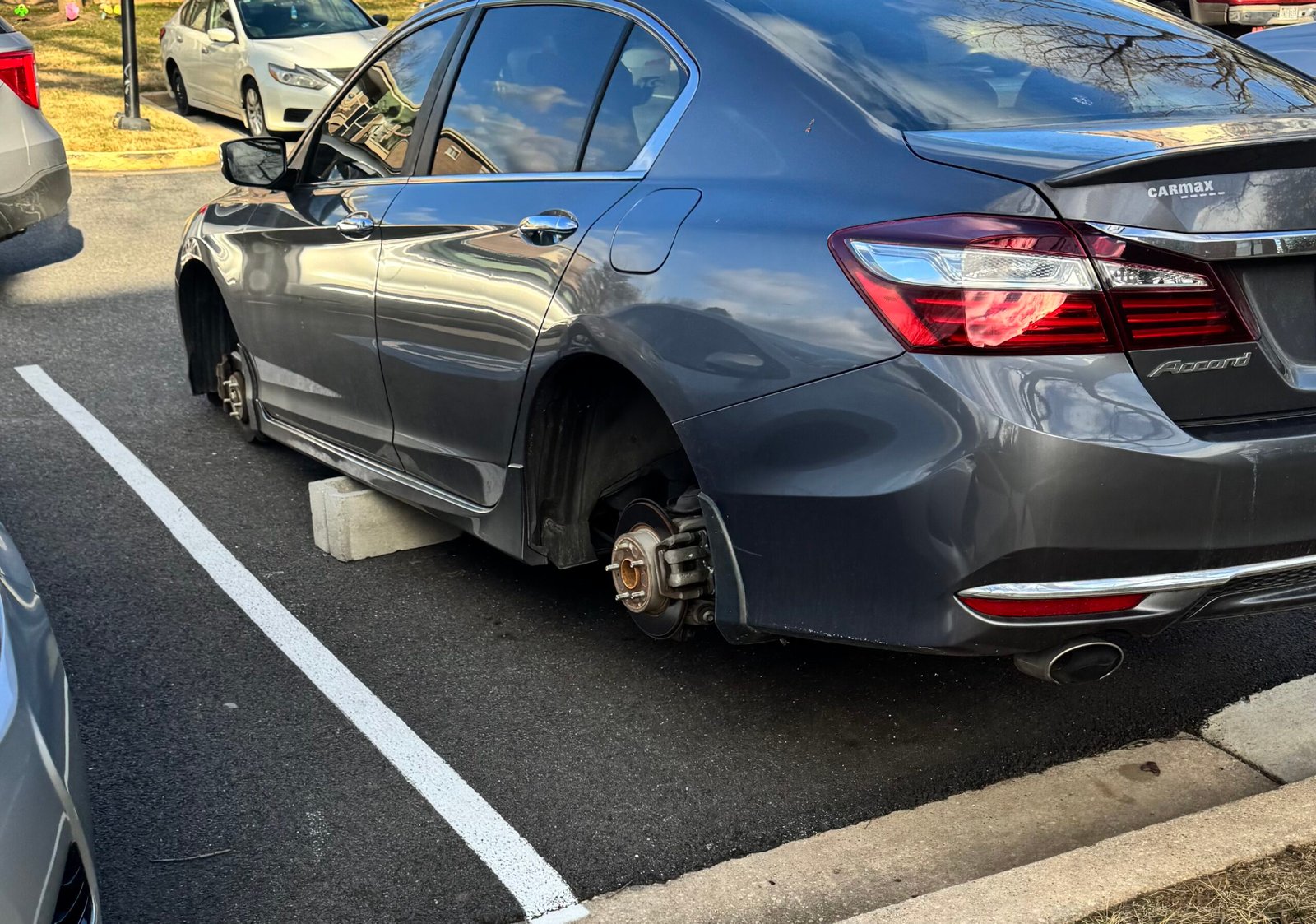
A missing wheel or damaged wheel changes the towing situation.
A normal tow setup may not work if the vehicle cannot sit, roll, or steer properly.
A flatbed may be the better option if:
- One wheel is missing
- A wheel is bent
- Lug nuts are damaged
- The tire came off
- The suspension is broken
- The vehicle is sitting unevenly
- The car cannot roll straight
In these cases, missing wheels towing may be needed so the vehicle can be moved with the right equipment and care.
Tell the dispatcher exactly what happened before the truck is sent.
When You Need Long-Distance Transport
Flatbed towing is often preferred for longer transport.
When a vehicle travels farther, road contact matters more. A wheel-lift tow may leave two wheels rolling for the trip. A flatbed keeps the vehicle fully on the truck.
That can help reduce:
- Tire wear
- Drivetrain strain
- Road debris exposure
- Mileage movement
- Suspension stress
- Risk from rough road surfaces
If your vehicle needs to move across Los Angeles or to a farther repair shop, long-distance towing may be safer with a flatbed.
When You Need Motorcycle or Scooter Transport
Motorcycles and scooters often need a stable towing setup.
A flatbed tow truck can help keep the motorcycle or scooter upright and secure during transport.
A flatbed may be useful for:
- Motorcycles that will not start
- Scooters with wheel or tire damage
- Bikes involved in accidents
- Motorcycles with low clearance
- Long-distance motorcycle transport
- Bikes that cannot be safely ridden
For two-wheel vehicles, motorcycle towing may be needed so the bike can be secured properly.
When the Vehicle Is in a Parking Garage
Parking garages can make towing harder.
The ceiling may be low. The space may be tight. The vehicle may be parked near a wall, pillar, gate, curb, or another car.
Sometimes a flatbed cannot fit inside the structure. In other cases, the vehicle may need to be moved out carefully before loading.
If your car is stuck in a garage, parking garage towing may be needed before the vehicle can be loaded safely.
Share these details when you call:
- Garage address
- Parking level
- Clearance height
- Best entrance
- Gate code, if needed
- Whether the vehicle can roll
- Whether the steering works
- Whether another vehicle blocks access
- Whether the vehicle is close to a wall or curb
These details help the tow team choose the right approach.
When a Flatbed May Not Be the First Choice
Flatbed towing is useful, but it is not always the first option.
A flatbed may not be ideal if:
- The vehicle is stuck in a very low garage
- The street is too narrow for loading
- The vehicle is blocked in tightly
- A smaller tow truck can safely extract the vehicle first
- The vehicle only needs a short, simple tow
- The car is standard and can roll safely
That is why dispatch details matter.
The best tow truck depends on the vehicle, location, damage, clearance, distance, and access.
Benefits of a Flatbed Tow Truck
The main benefit of a flatbed tow truck is protection.
Because the vehicle rides fully on the truck bed, there is less risk from road contact during transport.
Flatbed towing can help reduce risk to:
- Transmission
- Tires
- Wheels
- Suspension
- Drivetrain
- Front bumper
- Rear bumper
- Undercarriage
- Body panels
- EV systems
- Classic or exotic vehicle parts
It can also reduce:
- Extra mileage
- Tire wear
- Road debris exposure
- Scraping during transport
- Stress on damaged vehicle parts
For the right vehicle, flatbed towing can save stress, time, and repair costs.
What to Tell the Tow Company Before They Send a Truck
Clear details help avoid delays.
When you call for towing services in Los Angeles, share:
- Your exact location
- Nearby cross streets
- Vehicle make and model
- Whether the car is AWD, 4WD, EV, hybrid, exotic, lowered, or classic
- Whether the vehicle can roll
- Whether the vehicle can shift into neutral
- Whether the steering works
- Whether a wheel is missing or damaged
- Whether the vehicle was in an accident
- Whether it is in a parking garage
- Clearance height, if inside a structure
- Where the vehicle needs to go
You do not need to know every technical detail. Just explain what you see and what happened.
Simple Flatbed Decision Checklist
Use this quick checklist.
You may need a flatbed tow truck if the answer is yes to any of these:
- Is the vehicle AWD or 4WD?
- Is the vehicle electric or hybrid?
- Was it in an accident?
- Is the vehicle severely damaged?
- Is a wheel missing?
- Are the tires, wheels, or suspension damaged?
- Is the vehicle stuck in park or stuck in gear?
- Can the vehicle not roll?
- Is the vehicle low to the ground?
- Is it an exotic, luxury, classic, or performance car?
- Is it a motorcycle or scooter?
- Will it travel a longer distance?
- Do you want all four wheels off the road?
- Could a regular tow cause scraping or extra damage?
If yes, ask about flatbed towing before the truck is dispatched.
Common Los Angeles Situations Where Flatbed Towing Helps
Flatbed towing is common in many Los Angeles roadside situations.
Drivers may need it near:
- Apartment garages
- Office parking structures
- Shopping center lots
- Repair shops
- Freeway ramps
- Narrow residential streets
- Hillside roads
- Beach parking areas
- Medical office lots
- Hotel garages
- Dealerships
- Body shops
Los Angeles has tight parking, steep driveways, low-clearance garages, busy streets, and many high-value vehicles. That makes choosing the right tow setup important.
Flatbed Towing Is About Preventing Extra Damage
The reason to request a flatbed tow truck is simple: protection.
If the vehicle is already damaged, low, expensive, electric, AWD, 4WD, stuck in gear, or unable to roll, the wrong towing method may create more problems.
Flatbed towing helps reduce the chance of added damage during transport.
That matters when your vehicle is already in a difficult situation.
Frequently Asked Questions
When should I use a flatbed tow truck?
Use a flatbed tow truck when the vehicle should stay fully off the road. This is common for AWD vehicles, 4WD vehicles, EVs, accident-damaged cars, low-clearance cars, classic cars, exotic cars, motorcycles, and vehicles that cannot roll.
What cars have to be towed on a flatbed?
Many AWD, 4WD, electric, hybrid, luxury, exotic, classic, low-clearance, and severely damaged vehicles are better moved on a flatbed. A flatbed may also be needed if the car is stuck in park, missing a wheel, or unable to roll.
Is flatbed towing safer than regular towing?
Flatbed towing is often safer when the vehicle needs extra protection. Since all four wheels stay off the road, it can help protect the transmission, tires, suspension, drivetrain, undercarriage, and body panels.
H3: Should an AWD car be towed on a flatbed?
In many cases, yes. AWD vehicles can have sensitive drivetrain systems. A flatbed keeps all four wheels off the road, which may reduce the risk of drivetrain or transmission damage.
Do electric vehicles need flatbed towing?
Many EVs are best transported on a flatbed. The right method depends on the vehicle, its condition, and the manufacturer’s towing guidance.
Can a flatbed tow a car from a parking garage?
Sometimes yes, but many garages have low clearance. The tow team may need garage details first, including height clearance, parking level, entrance, and whether the vehicle can roll.
Is flatbed towing better after an accident?
Often, yes. After an accident, the wheels, suspension, steering, or frame may be damaged. A flatbed can help move the vehicle without keeping damaged wheels on the road.
Does a car stuck in park need a flatbed tow truck?
It may. If the vehicle cannot shift into neutral or roll safely, a flatbed may be needed. Tell the tow provider if the car is stuck in park before the truck is sent.
Can motorcycles and scooters be moved on a flatbed?
Yes. A flatbed can help keep motorcycles and scooters upright and secure during transport, especially after a breakdown, accident, or tire problem.
Is flatbed towing better for long-distance transport?
Often, yes. Flatbed towing keeps the vehicle fully off the road, which may reduce tire wear, mileage movement, road debris exposure, and drivetrain strain during longer transport.
When should I request a flatbed instead of waiting for the driver to decide?
Request a flatbed if the vehicle is AWD, 4WD, electric, low, damaged, exotic, classic, unable to roll, missing a wheel, stuck in gear, or traveling a longer distance.
What details should I share when requesting flatbed towing?
Share your location, vehicle make and model, drivetrain type, whether it can roll, whether it shifts into neutral, whether it has accident damage, and whether it is low, electric, classic, exotic, or in a parking garage.
Final Thoughts
A flatbed tow truck is not needed for every tow, but it is often the safer choice when your vehicle needs extra protection.
Choose flatbed towing when the car is damaged, low to the ground, AWD, 4WD, electric, classic, exotic, unable to roll, stuck in park, missing a wheel, or at risk of scraping during transport.
The right tow setup protects the vehicle and helps avoid extra damage.
For flatbed towing, careful vehicle transport, and roadside support in Los Angeles, call Certified Roadside Assistance.
Open Daily: 8:00 AM–12:00 AM
Call (310) 343-3357