

You turn the key. Nothing happens. Or maybe you hear a single click, then silence. A dead car battery is one of the most common reasons drivers get stranded in Los Angeles, and it almost always happens at the worst possible moment: before work, after a late shift, or in a parking garage with no one around.
The good news is that a dead battery is usually simple to diagnose and fix. This guide walks you through exactly what to do, step by step, so you can figure out what’s wrong and get back on the road safely.
If you’re stuck right now and just need help, call Certified Roadside Assistance at (310) 343-3357. We send a live person for assistance, and we offer mobile battery service across Los Angeles and the surrounding areas.
Quick Answer
If your car battery is dead, check for clear warning signs first, such as slow cranking or interior lights that don’t turn on. Try a jump start if you have cables and another vehicle nearby. If the car starts but dies again soon after, the battery likely needs replacement, not just a charge. When you’re unsure, stuck in an unsafe spot, or don’t have jump leads, call a roadside assistance provider for mobile help.
How to Tell If Your Battery Is Actually Dead
Not every no-start problem comes from the battery. Before you assume the worst, look for these signs.
Signs Point to a Dead or Dying Battery
- The engine won’t crank at all, and you hear nothing when you turn the key
- You hear a rapid clicking sound, but the engine doesn’t turn over
- Dashboard lights are dim or don’t come on
- The radio, power windows, or interior lights work weakly or not at all
- The engine cranks slowly, like it’s struggling, before finally starting (or not starting)
- You’ve needed a jump start more than once in the past few weeks
Signs Point to a Different Problem
- The engine cranks normally but won’t fire up (this often points to fuel or ignition issues)
- You hear the engine attempt to start, but it stalls right away
- Warning lights flash and dim unevenly, which can mean a loose or corroded terminal rather than a fully drained battery
If your symptoms match the first list, your battery is the likely culprit. If they match the second list, the issue may be something else, and a tow truck service or diagnostic visit may be the faster path forward.
Step-by-Step: What to Do When Your Battery Dies
Step 1: Get to a Safe Spot
If your car dies while you’re driving, move it out of traffic as soon as it’s safe. Use your hazard lights. If you’re in a parking lot or driveway when it happens, you’re already in a safer position to work.
Step 2: Check the Basics First
Before assuming the battery is dead, rule out the easy stuff:
- Make sure the car is actually in park or neutral
- Check that no interior lights, phone chargers, or accessories were left on overnight
- Look at the battery terminals for visible corrosion (a white or greenish crust)
- Listen closely when you turn the key. A single click usually means low voltage. Total silence can mean a fully drained or disconnected battery.
Step 3: Try a Jump Start
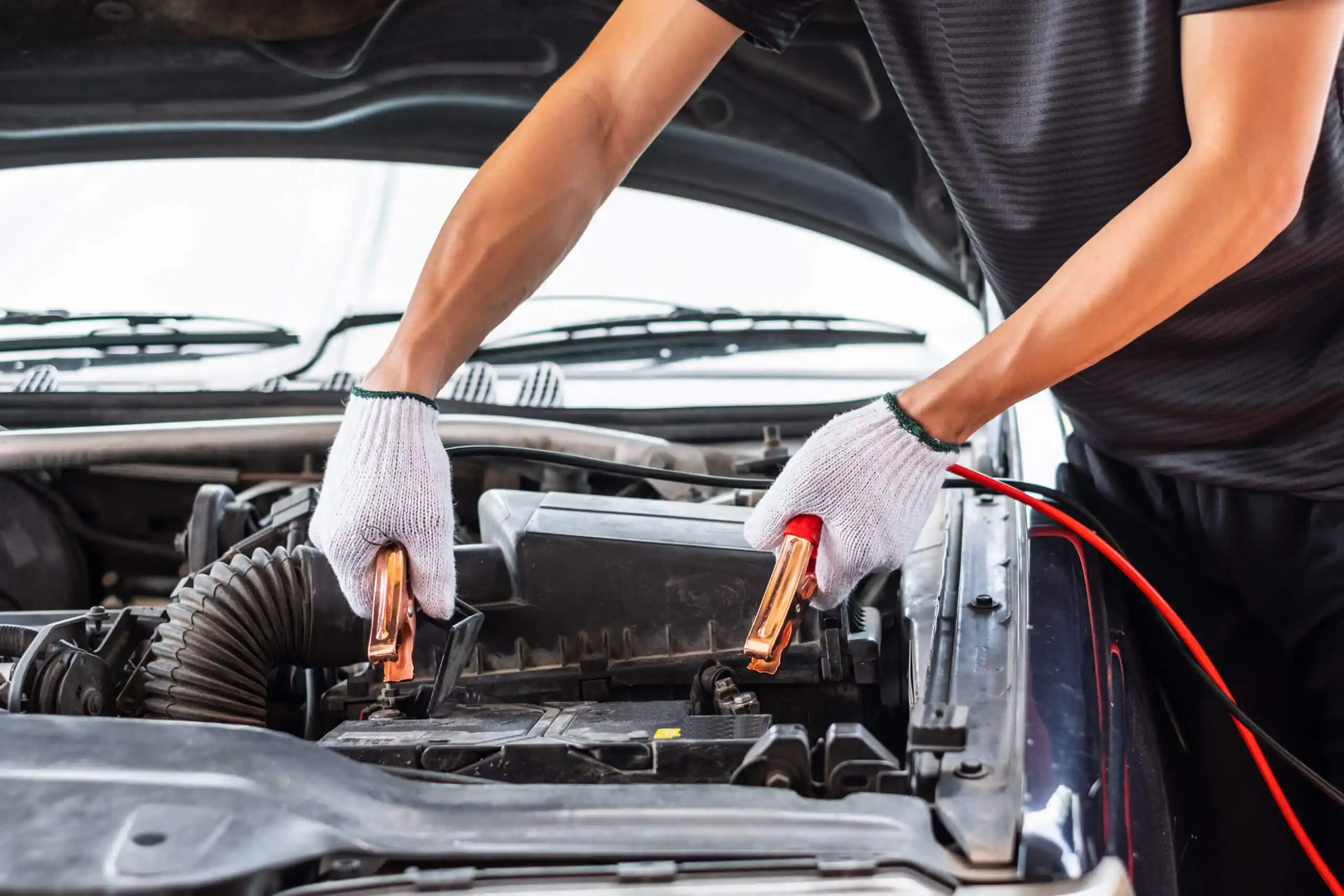
A jump start works by feeding power from a healthy battery into the dead one, just enough to start the engine and let the alternator take over from there. If you have jumper cables and a second vehicle nearby, here’s the order that keeps both cars and your hands safe:
Pull the working vehicle close enough that the cables reach without the bumpers touching, then shut off both ignitions. Clip one red clamp onto the positive post of the dead battery, then run the other red clamp to the positive post on the working battery. Next, attach a black clamp to the negative post of the working battery only. The final black clamp doesn’t go on the dead battery at all. Instead, ground it against a bare metal point on the dead car’s engine, somewhere away from the battery and any moving parts. This grounding step is what keeps sparks away from battery gases.
Let the working car idle for a couple of minutes before you attempt to start the engine on the dead vehicle. If it turns over, keep it running. Driving for 15 to 20 minutes afterward gives the alternator time to rebuild the charge. If two or three tries don’t bring it to life, stop. Forcing it repeatedly can strain the car’s electric system rather than fix it.
Don’t have cables on hand? Most drivers don’t, and borrowing a set from a stranger isn’t always realistic. Our jump start service sends a technician straight to wherever you’re parked, fully equipped, so you’re not left waiting on a passerby or hunting down auto parts stores for a set of cables you’ll rarely use again.
Step 4: Watch for Repeat Problems
A successful jump start doesn’t always mean the issue is solved. If the battery is simply old or failing, it will likely die again within hours or days. Pay attention to whether the problem repeats.
Step 5: Know When Replacement, Not a Jump, Is the Answer
A jump start is a temporary fix for a one-time drain, like leaving your headlights on overnight. It is not a long-term solution for a battery that’s reached the end of its life. Replacement is usually the better choice when:
- You’ve needed more than one jump in a short period
- The car struggles to start even after a fresh jump
- The battery is more than three to five years old
- Electronics behave inconsistently even when the engine is running
Our car battery replacement service handles this directly, with mobile delivery and installation so you don’t need to visit a shop.
When You Don’t Have Jumper Cables or Help Nearby
Not everyone carries jumper cables, and not every location has another driver willing to stop. If you’re stuck without the tools or support to jump-start your car yourself, calling a mobile provider is the safer and faster option. A technician arrives with professional-grade equipment, tests the battery on the spot, and can recommend a jump or a full replacement depending on what they find.
This matters even more in specific situations:
- Parking garages and underground structures, where low clearance can complicate access
- Late-night breakdowns, when finding a passerby isn’t realistic
- Busy streets or unsafe shoulders, where working under the hood yourself isn’t worth the risk
What a Mobile Battery Technician Actually Does
Calling for professional help skips most of the guesswork. Here’s roughly how a visit plays out.
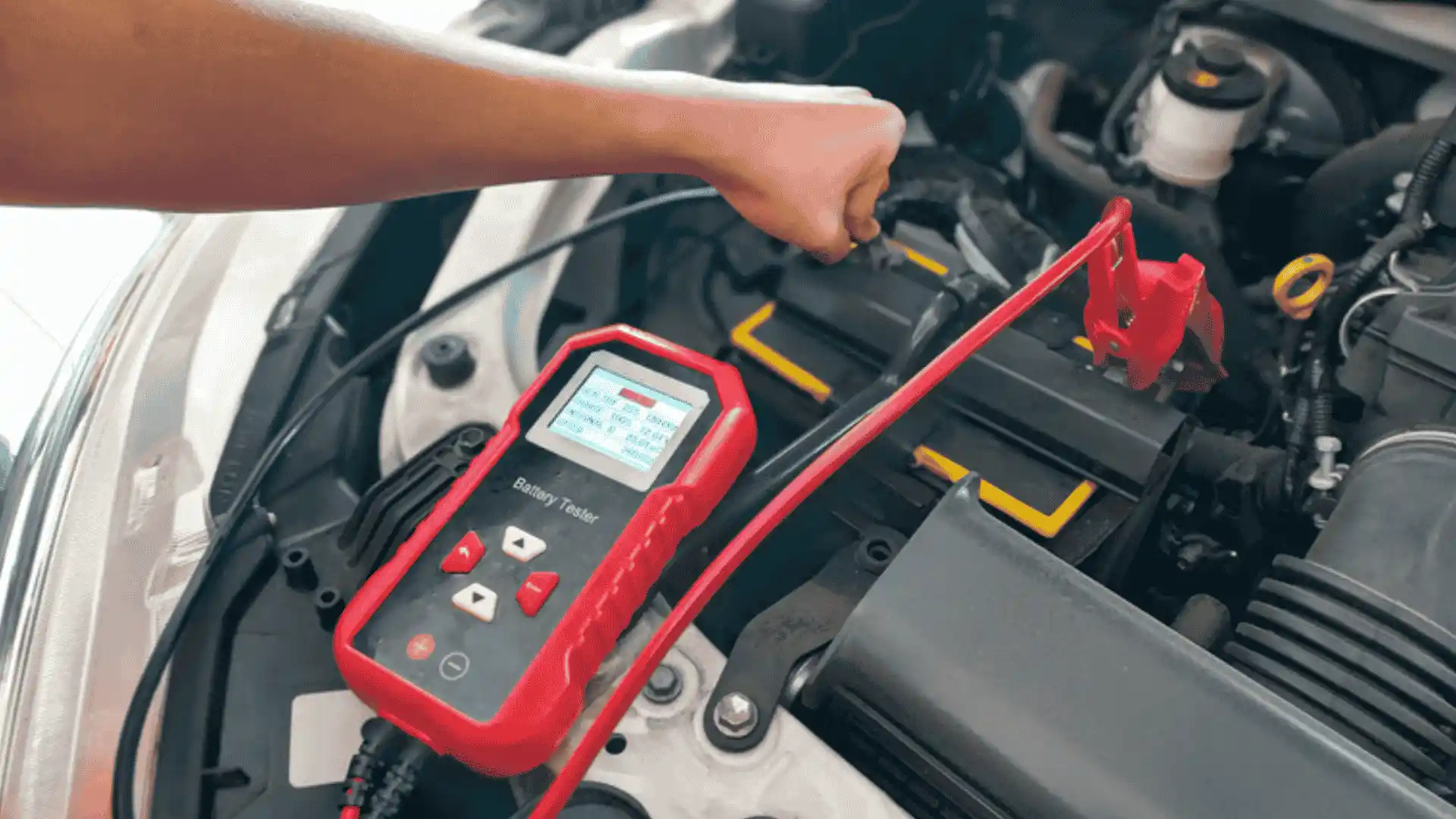
You start by describing what’s happening, your location, the vehicle’s make and model, and whatever you noticed when you turned the key (clicking, total silence, dim lights). That’s enough for a technician to head your way with the right equipment already loaded. Once they arrive, they get your battery tested on the spot using a load tester, which shows whether it just needs a charge or has actually reached the end of its lifespan. From there, you get a same-visit fix. If a jump is all it needs, they’ll start the car, and you’re back on the road in minutes. If the battery is shot, a replacement gets delivered, installed, and tested before the technician leaves.
Skipping the guesswork this way is usually faster, and often cheaper, than towing a car to a shop only to learn it needed a five-minute swap.
Common Mistakes to Avoid
A few habits make a dead battery situation worse instead of better:
Jumping the car over and over without ever asking why it keeps happening doesn’t fix anything. It just delays the moment you’ll need a tow truck instead of a jump box. Corrosion on the terminals gets overlooked just as often. That white or greenish buildup can block a full charge even when the battery underneath is perfectly fine, so it’s worth a quick visual check before writing the battery off entirely. Age matters too. Once a battery passes the three-to-five-year mark and starts acting up, replacing it tends to save more money than the cost of repeated jumps and tow calls combined. And one more habit worth breaking: shutting the engine off again right after a jump. Short trips don’t give the alternator enough time to rebuild a meaningful charge, which is exactly how a “fixed” battery dies again by the next morning.
Jump Start vs. Battery Replacement: Quick Comparison
| Situation | Best Fix |
| Lights left on overnight, one-time drain | Jump start |
| Battery has died more than once recently | Replacement |
| Car cranks slowly even after charging | Replacement |
| Battery is over 3-5 years old | Replacement |
| No cables or no one nearby to help | Call mobile roadside assistance |
Frequently Asked Questions
How long does a car battery usually last?
Three to five years is the typical range, but that window shrinks fast under Los Angeles heat. Constant high temperatures wear down the internal components quicker than they would in a milder climate, so a battery that’s lasted four years elsewhere might only make it three here.
Can I drive right after a jump start?
You should, actually. A jump only gets the engine running again; it doesn’t fully recharge the battery on its own. Driving for 15 to 20 minutes lets the alternator do that work. Shutting the engine off again too soon undoes most of the benefit.
Why does my battery keep dying even after a jump start?
That pattern usually points to a battery that can no longer hold a charge, not a one-time drain. Once a battery gets tested and confirmed as the source, another jump just delays the same problem. Our car battery replacement page covers what that process looks like.
Is it safe to jump-start a car in the rain?
It’s better to skip it. Working around metal clamps and exposed terminals in wet conditions increases the risk of electric shock or a short circuit. If the weather’s against you, calling in a professional is the smarter move.
What if my battery is dead in a parking garage?
Tight clearances and low ceilings can turn a simple jump into a logistical headache. Our parking garage towing team and mobile battery crews are set up to work in those conditions without the hassle.
Do you offer emergency battery help at night?
We do. We are available 24/7. If your situation can’t wait, our emergency roadside assistance page has more on how that works.
Get Mobile Battery Help Across Los Angeles
Certified Roadside Assistance provides mobile jump-starts and battery replacements throughout Los Angeles and nearby communities, including Santa Monica, Beverly Hills, West Hollywood, Culver City, Sherman Oaks, Van Nuys, and Malibu. View our full coverage on the service areas page.
A dead battery doesn’t have to mean a long wait or an expensive tow. Share your location and vehicle details, and we’ll guide you to the right fix, whether that’s a quick jump or a full replacement.
Call (310) 343-3357 for fast, mobile battery help. A live person answers every call.
Related reading: Roadside Assistance vs. Towing: Which One Do You Need?