

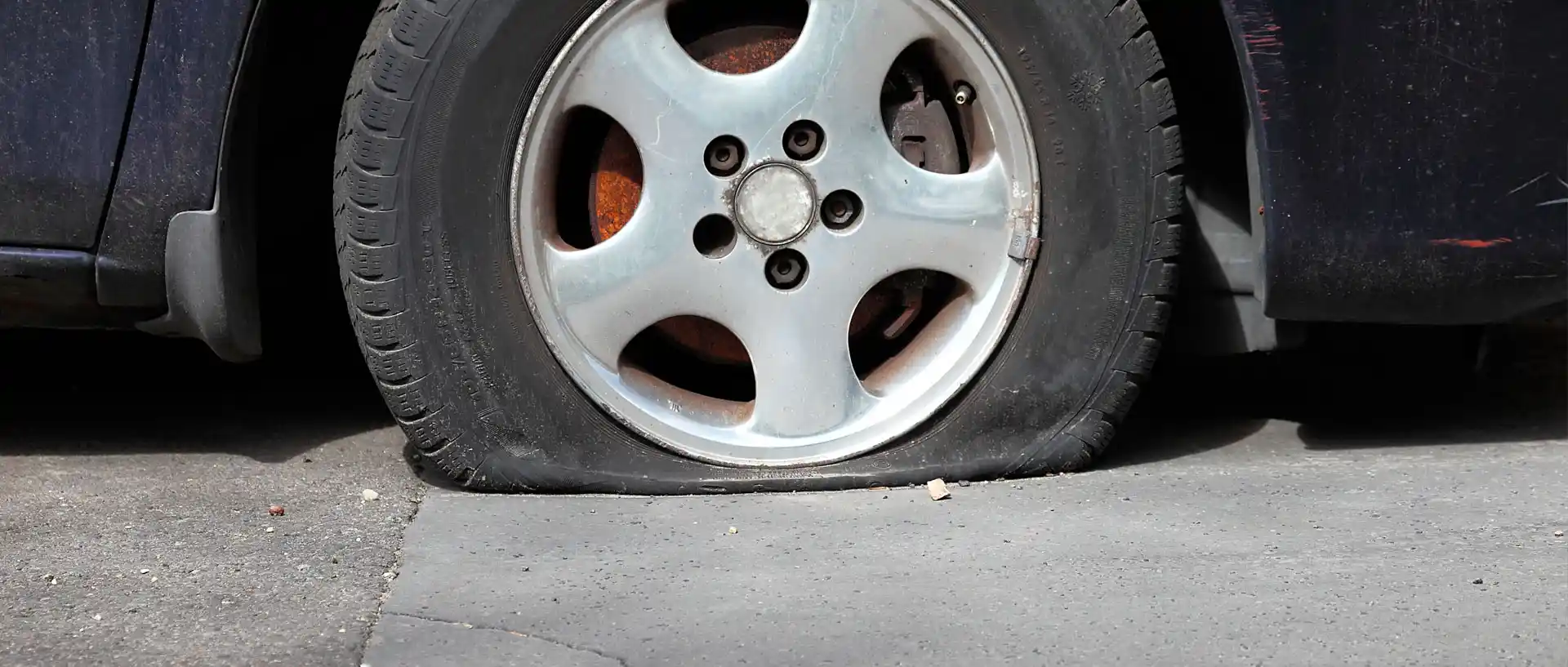
A flat tire rarely happens at a convenient time. One second you’re driving normally, the next you feel the car pull to one side or hear that unmistakable thumping sound. Whether it happens in a parking lot, on a side street, or while doing 60 on the freeway, knowing the right next move keeps you safe and gets you moving again faster.
This guide covers exactly what to do when a tire goes flat, how to tell whether you can handle it yourself, and when calling for mobile help beats trying to manage it alone.
If you’re dealing with a flat tire right now, call Certified Roadside Assistance at (310) 343-3357. A live person answers every call, and we send help directly to your location across Los Angeles.
Quick Answer
If you have a flat tire, get the car to a safe, flat surface first, away from traffic. Turn on your hazard lights. If you have a usable spare and the location is safe to work in, you can install it yourself or call for help to do it for you. If the spare is missing, damaged, or the situation feels unsafe, towing to a tire shop is the better move. Our tire change service handles spare installs across the city.
Step One: Get Somewhere Safe
The instinct when a tire blows is to stop immediately, but stopping in the wrong spot creates more risk than the flat itself. If you’re driving and notice a flat, ease off the gas rather than braking hard. Steer toward the shoulder, a parking lot, or any flat, stable surface away from moving traffic. Avoid sharp turns or sudden stops, since a flat tire changes how the car handles.
Once you’re stopped, turn on your hazard lights right away, even before you get out. If you’re on a freeway shoulder, stay inside the vehicle with your seatbelt on until you’re confident it’s safe to step out. Tight shoulders next to fast-moving traffic are not the place to attempt a tire change.
Step Two: Figure Out What You’re Working With
Before deciding your next move, take a quick look at the situation.
Check which tire is actually flat. Walk around the car if it’s safe, or look from inside if it’s not. Note whether it’s a slow leak that finally gave out or a sudden blowout from hitting something. Glance at the tire itself for an obvious cause, like a nail, a deep cut, or a chunk torn from the sidewall.
Then check what you have to work with. Does the vehicle carry a full-size spare, a compact donut, or no spare at all? Some newer cars skip the spare entirely and rely on a repair kit instead, which won’t help with a sidewall tear or a torn tread.
When You Can Handle It Yourself
If you’ve got a usable spare, the tools that came with the car, and a genuinely safe spot to work, changing the tire yourself is realistic.
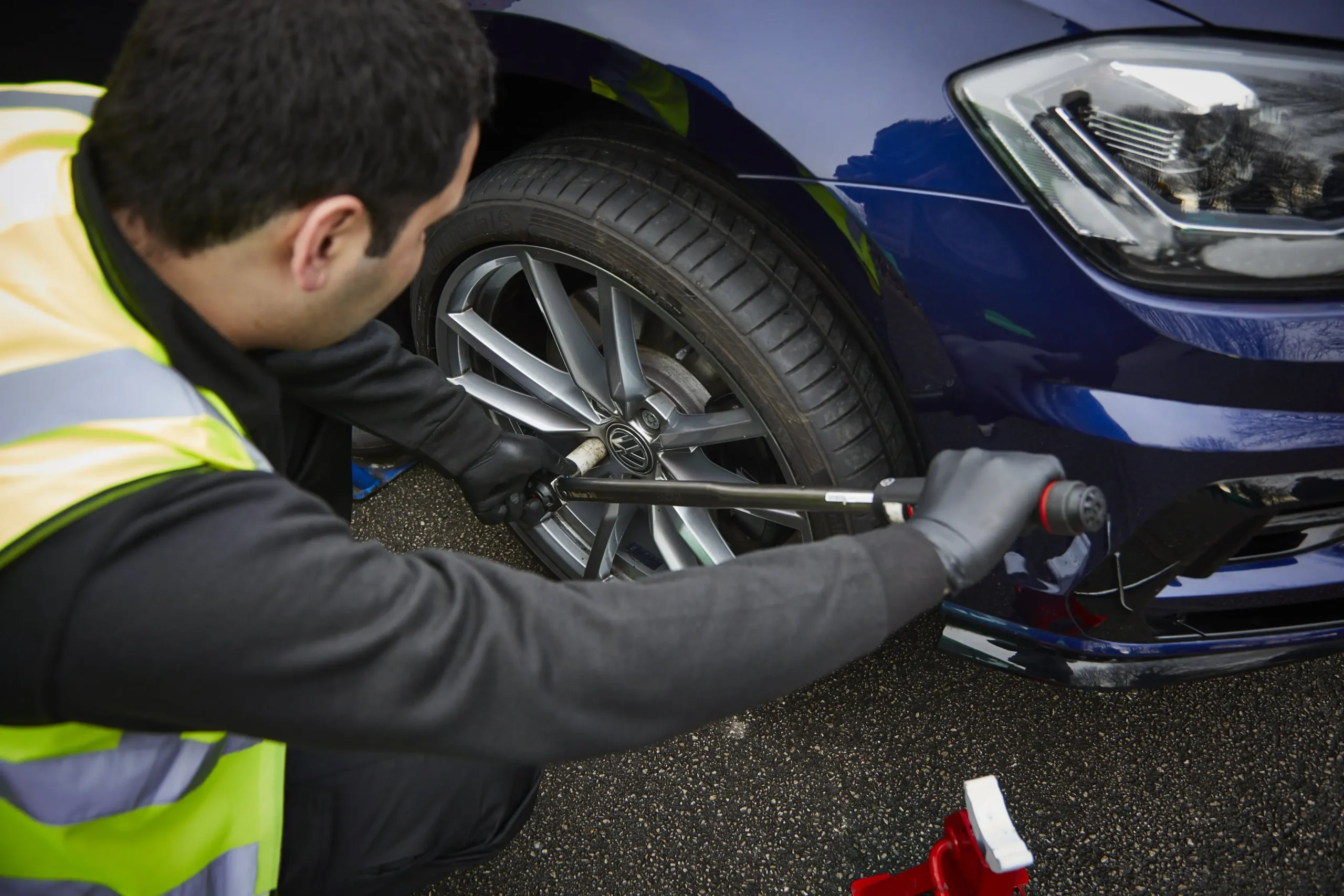
Loosen the lug nuts slightly before jacking the car up, since it’s much harder once the wheel is off the ground. Raise the vehicle using the jack point specified in the owner’s manual rather than guessing, since the wrong spot can damage the frame or cause the car to slip off the jack. Remove the lug nuts fully, pull off the flat tire, and mount the spare in its place. Tighten the lug nuts in a star pattern rather than going around in a circle, which helps the wheel seat evenly. Lower the car and give the lug nuts one more firm tightening once all the weight is back on the tire.
A donut spare isn’t built for long drives. Most are rated for around 50 miles at reduced speed, just enough to get you to a tire shop safely.
When It’s Smarter to Call for Help
Plenty of situations make a DIY tire change a bad idea, even if you technically know how.
A locked wheel with a missing key leaves you stuck, no matter how prepared you are. A damaged or underinflated spare won’t solve the problem either; it just delays it. If the flat happened somewhere unsafe, like a narrow freeway shoulder, a steep incline, or a dark stretch of road with no lighting, the risk of working roadside outweighs the time saved. And if you’re simply not confident lifting the car or handling the tools, that’s a completely reasonable reason to call instead of guessing.
A mobile technician brings the right jack, the right torque tools, and experience working in cramped or awkward spots. They’ll confirm you have a usable spare, install it properly, and get you safely on your way to a shop for a permanent fix.
To request help, our tire change service sends someone to wherever you’re parked, with everything needed to install your spare on-site.
What a Mobile Tire Technician Needs From You
A quick call gets help moving fast. Here’s what to have ready:
Your exact location matters most, ideally a cross street, landmark, or pin if you can drop one. Let them know which tire is flat (front or back, left or right) so they arrive prepared. Confirm whether you have a spare and where it’s stored, since some vehicles keep it under the trunk floor or mounted underneath the chassis. If your wheels use a locking lug nut, mention whether you have the key, because a missing wheel lock key can turn a five-minute job into a bigger one. Finally, describe where the car is sitting, whether that’s a flat driveway, a tight street, or a parking structure with low clearance.
Spare Tire vs. Towing: Which One Do You Need?
| Situation | Best Option |
| Usable spare, safe location | Spare tire install |
| No spare, or spare is flat/damaged | Towing to a tire shop |
| Wheel lock key missing | Towing, unless the key can be located |
| Sidewall blowout or shredded tire | Towing (spare alone may not be safe to mount) |
| Unsafe location (freeway shoulder, no lighting) | Call for mobile help rather than DIY |
If towing ends up being the right call, our towing services page covers what that process looks like from start to finish.
Common Mistakes People Make With a Flat Tire
Driving on a flat, even slowly and for a short distance, can shred the tire completely and damage the wheel underneath, turning a simple fix into a much costlier one. Skipping the hazard lights is another common slip, especially for drivers who plan to “just pull over for a second.” Visibility matters the moment you stop, not after.
Treating a donut spare like a regular tire causes problems too. Driving 70 miles an hour on a compact spare puts real strain on a tire that was never built for that kind of use. And working too close to live traffic, even on what feels like a wide shoulder, remains one of the most dangerous parts of any roadside repair. If there’s any doubt about the safety of the spot, waiting inside the vehicle for help is almost always the better call.
Frequently Asked Questions
Can I drive on a flat tire to get somewhere safer? Only for a very short distance, and only if absolutely necessary. Driving even a quarter mile on a fully flat tire can damage the wheel rim, making the repair more expensive. If you can coast to a safer spot without much distance, that’s fine. Otherwise, stop where you are and call for help.
How far can I drive on a donut spare? Most manufacturers rate a compact spare for around 50 miles at speeds under 50 mph. It’s meant to get you to a tire shop, not to replace a full-size tire long term.
What if I don’t have a spare tire at all? Many newer vehicles come with a tire repair kit instead of a spare, which only works for small punctures in the tread, not sidewall damage. If you’re without a usable spare, towing to a shop is typically the safer route. See our towing services page for details.
Is it safe to change a tire on the freeway shoulder? Generally, no. Freeway shoulders put you close to high-speed traffic with little protection. If you’re stuck on a freeway, stay inside the vehicle with your seatbelt on, keep hazard lights on, and call for help rather than attempting to change yourself.
What if my wheel lock key is missing? Without the key, the wheel can’t be safely removed. Let the dispatcher know during the call so they can plan accordingly, since towing may end up being the faster solution.
Do you offer flat tire help at night? Yes. We’re available 24/7. For situations that can’t wait, our emergency roadside assistance page has more information.
Flat Tire Help Across Los Angeles
Certified Roadside Assistance provides mobile tire change service throughout Los Angeles and nearby communities, including Santa Monica, Beverly Hills, West Hollywood, Culver City, Sherman Oaks, Van Nuys, and Malibu. See our full coverage on the service areas page.
A flat tire doesn’t have to derail your day. Share your location and we’ll get a spare installed or arrange a tow to the nearest shop, whichever fits your situation.
Call (310) 343-3357 for fast, mobile tire help. A live person answers every call.
Related reading: Roadside Assistance vs. Towing: Which One Do You Need?