

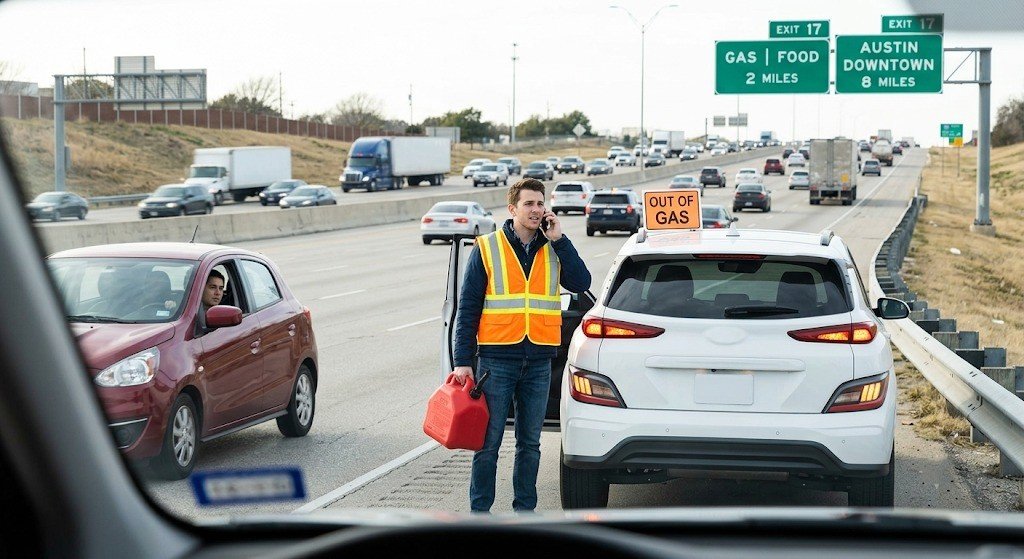
LA traffic is unpredictable. You leave with half a tank, hit a standstill on the 405, and by the time traffic moves again, the fuel gauge has crossed into empty. Then comes that familiar loss of power, the engine sputtering and going quiet while you’re still on the freeway with nowhere to go.
Running out of gas on a freeway is one of the most stressful roadside situations, not because it’s complicated to fix, but because the location makes everything feel more dangerous. This guide walks you through what to do, step by step, so you stay safe and get back on the road with as little hassle as possible.
If you need fuel right now, call Certified Roadside Assistance at (310) 343-3357. We deliver gas and diesel directly to stranded drivers across Los Angeles, and a live person answers every call.
Quick Answer
If you run out of gas on the freeway, coast to the shoulder as safely as possible, turn on your hazard lights, and stay inside the vehicle. Do not walk along the freeway to reach a gas station. Call for mobile fuel delivery service instead. A technician will bring enough gas or diesel to get you to the nearest station. Our fuel delivery service covers Los Angeles and the surrounding areas.
Step One: Get Off the Active Lane Immediately
The moment you feel the engine losing power, ease the steering wheel toward the right shoulder. Don’t brake hard. The car still has momentum and some steering control even without power, so use that to coast as far right as you can. Avoid stopping in an active lane at all costs. Even a partially blocked lane on a busy LA freeway creates a serious hazard for you and for other drivers.
If you can’t fully reach the shoulder before the car stops completely, get as far right as you can and turn the wheel toward the shoulder so the car faces away from traffic. This gives any approaching vehicle the best chance to steer around you.
Step Two: Make Yourself Visible
Once the car is stopped, turn on your hazard lights right away. This is the single most important thing you can do in the first seconds after stopping. If you have road flares or reflective triangles in the car, place them about 30 to 50 feet behind your vehicle once it’s safe to step out briefly. These extra signals give approaching drivers more time to react, especially at night or in low-visibility conditions like fog or rain.
If you’re on a stretch of freeway with a solid wall or barrier on the right, stay inside the car rather than stepping out onto a narrow shoulder with no escape route.
Step Three: Stay Inside the Vehicle
This one feels counterintuitive. When you’re stuck, the instinct is to do something, and walking feels like action. But walking along a freeway shoulder to reach a gas station is genuinely one of the most dangerous things a stranded driver can do. Freeway shoulders in Los Angeles are often narrow, poorly lit, and bordered by high-speed traffic. A fuel delivery call solves the problem without any of that risk.
Stay inside with your seatbelt fastened. Keep the hazard lights on. If you feel the car is in a particularly dangerous position, for example on a curve with poor visibility, you can carefully exit from the passenger side away from traffic and move behind the guardrail if one is available.
Step Four: Call for Mobile Fuel Delivery
This is the step that actually moves things forward. Mobile fuel delivery brings gas or diesel straight to your location on the freeway or shoulder. You don’t need to walk anywhere, flag down a stranger, or wait for a passing driver to stop.
When you call, have these four details ready:
Your exact location is the most important one. A cross street, freeway exit number, or a landmark (“just past the Sepulveda exit, northbound 405”) helps dispatch find you faster than a vague description. The fuel type, gas or diesel, matters because the wrong fuel causes serious engine damage. Your vehicle type, whether it’s a car, truck, or SUV, helps the technician arrive with the right equipment. Finally, mention any access constraints. A tight shoulder, a curve in the road, or a blocked right lane are all worth noting so the driver can approach safely.
Our fuel delivery team brings enough fuel to get you moving and to the nearest station, where you can fill up completely.
Step Five: Drive Straight to a Gas Station
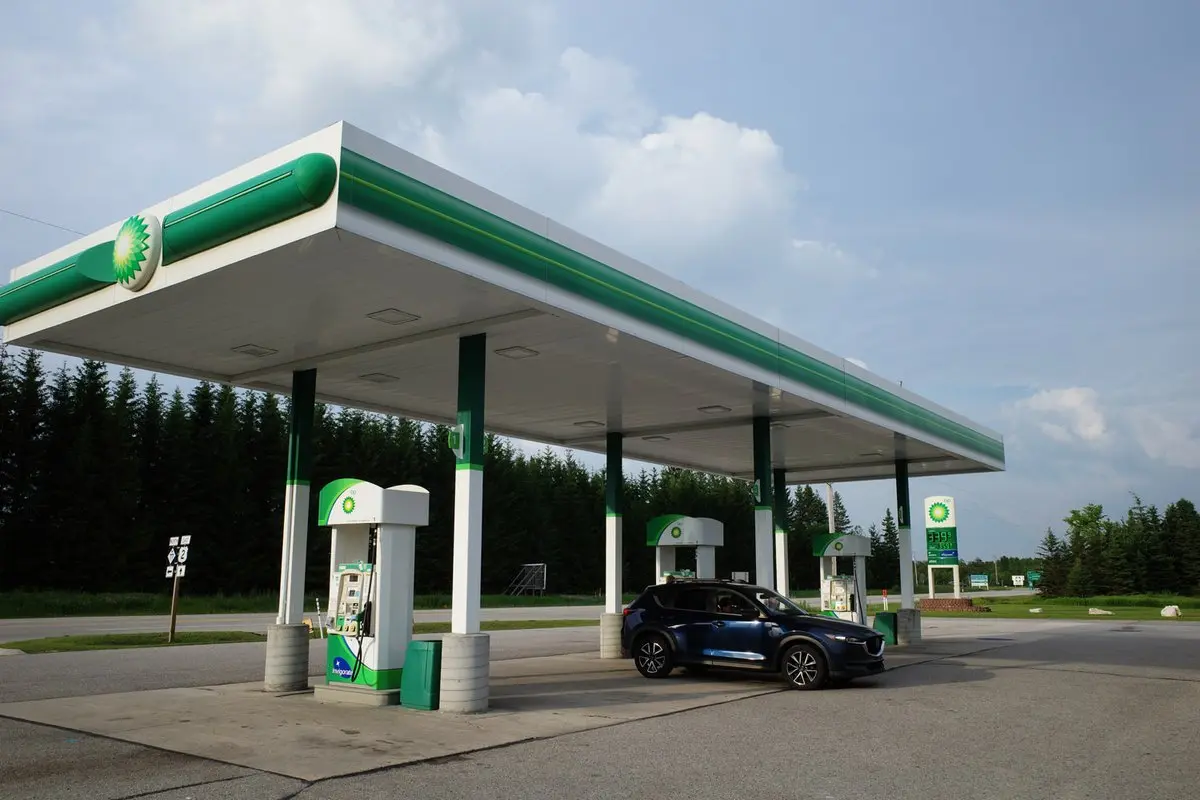
Mobile fuel delivery gives you just enough to get going safely. It’s not a full refuel. Once the technician arrives and fills your tank with a few gallons, drive directly to the nearest gas station and fill up before doing anything else. Running on just a small reserve puts you right back in the same situation if traffic slows again.
What If My Car Still Won’t Start After Getting Fuel?
Running your tank completely dry occasionally causes issues beyond just an empty fuel gauge. In some vehicles, the fuel pump runs cooler when submerged in gas. Running on empty for too long can cause the pump to overheat, which may leave the car struggling to start even once fuel arrives.
If that happens, the problem is no longer about an empty tank. Start with a jump start service to rule out a battery issue. If the car still won’t start, the fuel pump or another component may need attention, and towing to a mechanic becomes the right next move. Our towing services page covers what that process looks like.
Running Out of Gas vs. Other Fuel Problems
| Situation | What It Usually Means | Next Step |
| Engine sputters and stops, gauge shows empty | Out of gas | Fuel delivery |
| Fuel gauge shows gas remaining but engine dies | Possible fuel pump or sensor issue | Towing to a mechanic |
| Car starts after fuel delivery but dies quickly | Fuel pump may be damaged | Jump start check, then towing |
| Wrong fuel type added at the pump | Do not start the engine | Towing immediately |
If you accidentally put diesel in a gas car or vice versa, do not try to start the engine. The fuel needs to be drained professionally before the car moves at all.
Common Mistakes People Make
Calling someone to bring a gas can sounds simple, but sending a friend or family member to walk along a freeway shoulder is nearly as dangerous as walking yourself. The better answer is a mobile delivery vehicle with its own hazard lights, professional access to the shoulder, and the right container to transfer fuel safely.
Trying to push the car to an exit ramp is another common instinct that rarely works out. Freeways are long, ramps are often further than they appear, and pushing a car in traffic puts everyone involved at serious risk.
Guessing at the fuel type is a costly mistake too. Diesel pumped into a gas engine, or regular gas into a diesel truck, can cause significant damage. Always confirm what your vehicle takes before calling, it’s printed on the fuel cap on most vehicles made in the last decade.
And once the delivery is made, skipping the gas station to “just get home first” is the setup for a repeat breakdown. A few gallons is not a full tank, and LA traffic can eat through a small reserve faster than expected.
Frequently Asked Questions
Can I walk to a gas station if it’s nearby? It’s safer not to, even if you can see the station from where you’re stopped. Freeway shoulders are designed for emergencies, not foot traffic. A mobile fuel delivery call takes the walking out of the equation entirely.
Do you deliver both gas and diesel? Yes. Just let the dispatcher know which type your vehicle uses when you call, since putting the wrong fuel in causes engine damage.
How much fuel do you deliver? Enough to get you to the nearest gas station safely, not a full tank. Once you’re moving, pull in and fill up completely before continuing your trip.
We’re available 24/7. For urgent nighttime situations, our emergency roadside assistance page has more information on priority dispatch.
What if my car won’t start even after getting fuel? That usually points to a secondary issue, either a battery problem or a fuel pump weakened from running dry. Our jump start service is the first thing to try. If the car still doesn’t respond, towing services get it to a mechanic safely.
What if I’m stuck in a parking structure instead of a freeway? Fuel delivery works in parking structures too. Just share the level you’re on and the best entrance for access when you call.
How do I prevent running out of gas again? The best habit is refueling before the gauge hits a quarter tank rather than waiting for the low fuel warning. In stop-and-go LA traffic, a quarter tank can disappear faster than the gauge suggests.
Fuel Delivery Across Los Angeles
Certified Roadside Assistance provides mobile fuel delivery throughout Los Angeles and surrounding communities, including Santa Monica, Beverly Hills, West Hollywood, Culver City, Inglewood, North Hollywood, Sherman Oaks, Van Nuys, and Malibu. View the full list on our service areas page.
An empty fuel tank is one of the easier roadside problems to fix, as long as you stay safe while you wait. Share your location, fuel type, and vehicle details and we’ll get a technician to you.
Call (310) 343-3357 for mobile fuel delivery. A live person answers every call.
Related reading: Roadside Assistance vs. Towing: Which One Do You Need?