
By Certified Roadside Assistance | Updated September 2026
Your engine dies on the 405 at rush hour. Or another driver rear-ends you at a red light on Sunset Boulevard. Either way, the next few minutes matter most. The right moves keep you safe, protect your car, and make your insurance claim easier.
This guide shows you what to do after a breakdown or a crash in Los Angeles. You will learn who to call and which California rules protect you. You will also see how to get 24/7 towing services in Los Angeles from a team you choose.
Quick answer: After a breakdown or car accident in Los Angeles, move out of traffic if you safely can and turn on your hazard lights. Call 911 if anyone is hurt or a car blocks a lane. On a freeway, stay buckled inside your car. Then call a tow company you trust. Certified Roadside Assistance answers 24/7 at (310) 343-3357.
What Is Emergency Towing?
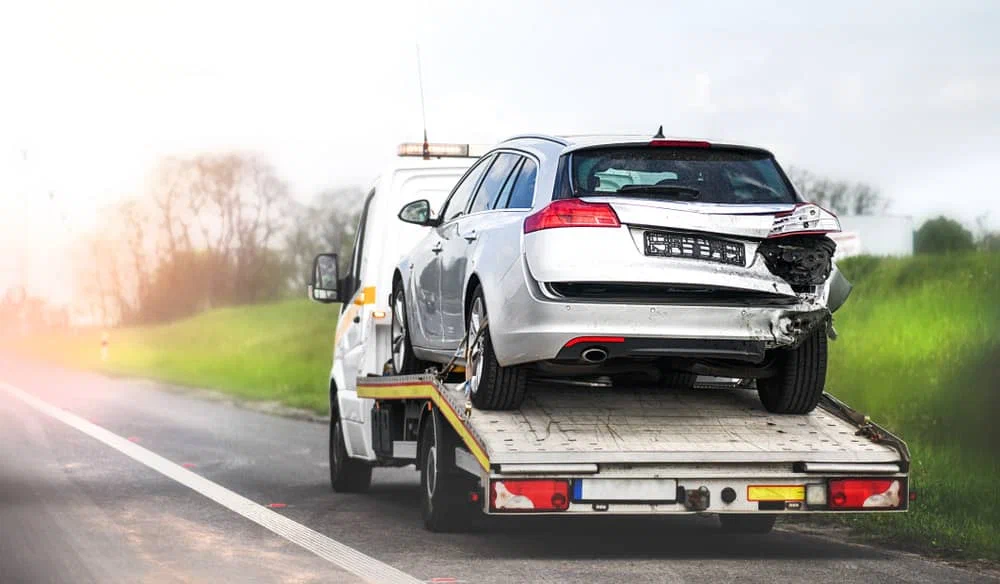
Emergency towing is the fast removal of a vehicle that is no longer safe to drive. It usually follows a crash, an engine failure, overheating, a broken axle, or a car stuck off the road. The goal is simple. First, get people out of danger. Then, move the car where it needs to go.
However, not every problem needs a tow. A tow truck moves your car, while emergency roadside assistance fixes a small problem where you stopped. Our guide to roadside assistance vs towing explains when each one makes sense.
What to Do When Your Car Breaks Down in Los Angeles
Breakdowns happen everywhere, from the Sepulveda Pass to quiet side streets. Follow these steps in order.
1. Get Out of the Traffic Lane
At the first sign of trouble, signal and steer right. Use your car’s momentum to reach the shoulder, an off-ramp, or a side street. Avoid stopping on a curve, a bridge, or anywhere other drivers cannot see you in time.
2. Turn On Your Hazard Lights
Hazard lights warn the drivers behind you. They also create a legal duty for those drivers. California expanded its Move Over law (AB 390) on January 1, 2026. Now, drivers must change lanes or slow down when they pass any stopped vehicle with its hazard lights on.
3. Stay Inside With Your Seatbelt On
On a freeway, your car is usually the safest place to wait. The CHP tells stranded drivers to stay inside with their seatbelts on until help arrives. If you must get out, use the passenger side, away from traffic. If a guardrail leaves no room on the shoulder, exit on the right and wait at a safe distance from the car.
4. Pin Down Your Exact Location
Help arrives faster when the dispatcher knows exactly where you are. Note the freeway name, your direction, and the last exit you passed. On surface streets, find the nearest cross street or landmark. You can also share your phone’s GPS location.
5. Call the Right Help
Call 911 if you feel unsafe or your car blocks a lane. For a tow to your home, mechanic, or dealership, call a 24/7 tow company. The table further down shows who to call in each situation.
Small Problem? You May Not Need a Tow
Many breakdowns end without a tow truck. Is the problem a dead battery, an empty tank, a flat tire, or keys locked inside? Start with these quick guides:
- What to do when your car battery is dead
- What to do if you run out of gas on the freeway
- How to handle a flat tire safely
- What to do if you lock your keys in your car
What to Do After a Car Accident in Los Angeles
A crash brings more stress than a breakdown. It involves more people, more rules, and higher stakes. If you cannot drive your car afterward, you will need accident towing in Los Angeles. Before the tow truck leaves, though, take these steps.
1. Check for Injuries and Call 911
Check yourself and your passengers first. If anyone is hurt, call 911 right away. Do not move a person with neck or back pain unless a fire or another danger forces you to.
2. Move Out of Traffic if the Cars Still Drive
If no one is hurt and the cars can move, pull onto the shoulder or a nearby side street. If your car cannot move, leave the hazard lights on and stay buckled inside.
3. Know Which Agency Will Respond
Who responds depends on where the crash happens. The CHP handles crashes on LA freeways. The LAPD covers most streets inside the City of Los Angeles. Santa Monica, Beverly Hills, Culver City, and Inglewood run their own police departments. Meanwhile, Malibu and West Hollywood rely on the LA County Sheriff’s Department.
4. Exchange Information
Swap names, phone numbers, driver’s license numbers, license plates, and insurance details with the other driver. Stay calm and stick to the facts. Do not argue about who caused the crash.
5. Take Photos Before the Tow
Photograph every vehicle from several angles. Capture the damage, license plates, street signs, traffic signals, and any skid marks. Once the tow truck moves your car, you cannot recreate the scene.
6. Remove Your Valuables
Take your registration, insurance card, garage remote, and personal items with you. Your car may sit at a body shop or storage yard for days.
7. Report the Crash to the DMV
File an SR-1 report with the DMV within 10 days if the crash injured anyone, even slightly. The same rule applies if someone died or property damage is over $1,000. You must file no matter who caused the crash. The SR-1 also stands apart from any police or insurance report. You can find the form on the California DMV accident reporting page.
8. Call Your Insurance Company
Ask your insurer where the car should go. Some insurers prefer a specific body shop. When you know the destination before the tow, you avoid paying for a second tow later.
Who Should You Call: 911, 511, or a Tow Company?
Los Angeles drivers have three main options. Each one fits a different situation.
| Situation | Who to Call | What Happens Next |
| Someone is hurt, a car blocks a lane, or you feel unsafe | 911 | Police, CHP, fire, or paramedics respond |
| Your car stalls on an LA County freeway during daytime hours | 511, then say “Motorist Aid” | Metro’s free Freeway Service Patrol helps you or moves your car to a safe spot off the freeway |
| You need your car taken to your home, mechanic, dealer, or body shop at any hour | A 24/7 tow company | A tow truck takes your car where you choose |
The Metro Freeway Service Patrol is a useful free program. Its trucks can jump a battery, change a flat with your spare, and give you up to a gallon of gas. However, it only runs during set daytime hours. It also only moves stalled cars to a safe drop-off spot off the freeway. It will not tow your car to your home or your repair shop. For that trip, and for any breakdown after dark, you need a private tow company.
Also, never leave a stalled car on the freeway for long. Under California Vehicle Code 22651, officers can remove a disabled car that sits on a freeway for more than four hours. They can act sooner if it blocks traffic. After that, daily storage fees add up fast.
How to Avoid Tow Truck Scams After a Crash
Sometimes a tow truck shows up at a crash scene before anyone calls one. Some operators race to accidents hoping to grab the job. Fortunately, California law protects you.
- Only accept a tow that you, your motor club, or the police called. Under California Vehicle Code 22513, a tow operator cannot stop at a crash scene to seek your business unless someone called it. Doing so is a misdemeanor.
- Get a written, itemized estimate first. When you are with your car, the operator must give you a written estimate of all charges before hooking it up. You sign it and keep a copy.
- Refuse surprise charges. The same law bars charges above the estimate unless you agree to them first.
- Check the company name. Make sure the name on the truck matches the company you called.
- Never sign a blank form. Read every document before you sign.
To learn what fair pricing looks like, read our guide on how much a tow truck costs in Los Angeles.
Which Tow Truck Does Your Car Need?
The right truck prevents new damage. Tell the dispatcher about your car, so the right equipment arrives the first time.
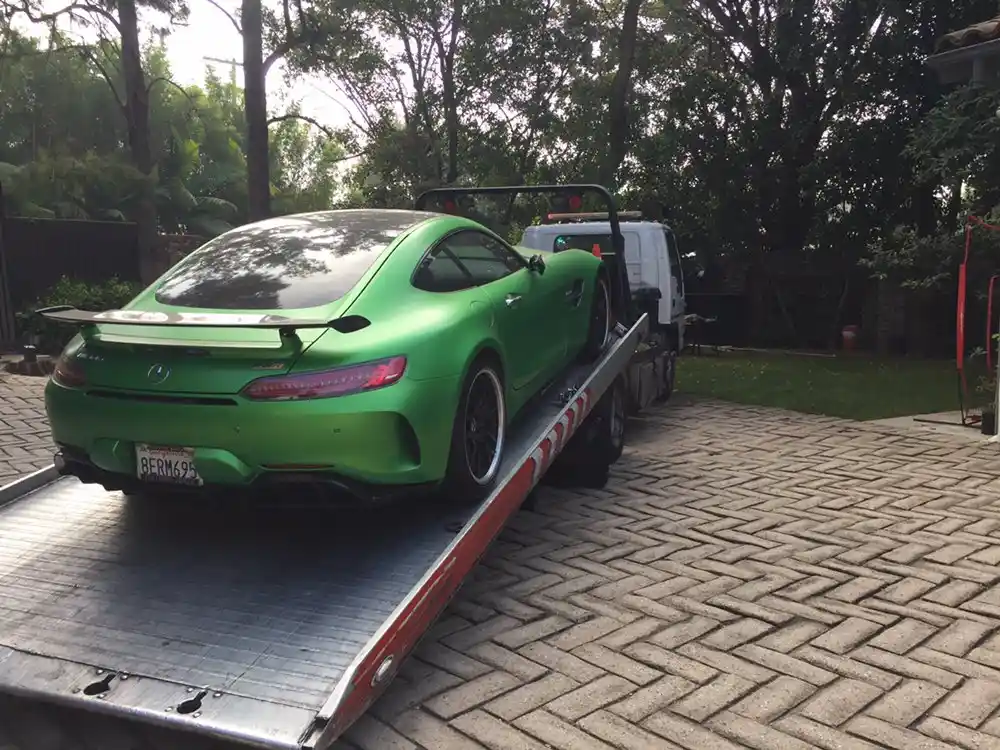
- Flatbed: This is the best choice for all-wheel-drive cars, luxury models, most electric vehicles, and cars with heavy crash damage. Flatbed towing carries all four wheels off the road. Learn more about when a car needs a flatbed tow truck.
- Low clearance truck: Many underground garages in Century City, Westwood, and Beverly Hills have ceilings too low for a standard tow truck. Parking garage towing with a low-profile truck gets your car out safely. For sports cars and lowered vehicles, ask for low-clearance exotic towing.
- Winch-out: Did your car slide into a ditch, sand, or mud, or off a canyon road like Mulholland Drive? Winch-out recovery pulls it back to solid ground.
- Missing wheel tow: A crash can snap a wheel or axle, and thieves sometimes steal wheels overnight. Towing for cars with missing wheels uses equipment that lifts the car without more damage.
- Motorcycle tow: Bikes need secure straps and a stable mount, not a standard car hookup. Choose motorcycle towing with the right gear.
- Long-distance tow: Want your car at a dealer or shop in another city? Ask about long distance towing.
What to Tell the Dispatcher When You Call
A clear call gets the right truck to you sooner. Have these details ready:
- Your exact location, direction of travel, and nearest exit or cross street
- The year, make, and model of your car
- Whether the car is all-wheel drive, electric, lowered, or exotic
- What happened, such as crash damage, a no-start, or a stuck car
- Whether the car sits in a parking garage or a tight space
- Where you want the car to go
24/7 Emergency Towing Across Los Angeles
Certified Roadside Assistance is a towing and roadside assistance company based on Roscomare Road in Bel Air. We answer calls 24 hours a day, every day of the year. Our location keeps us close to the Westside, the San Fernando Valley, and the coast.
Our coverage includes busy routes such as:
- The 405 through the Sepulveda Pass, between Brentwood and Sherman Oaks
- The 101 through Hollywood and into the Valley
- The 10 as it runs into Santa Monica
- Pacific Coast Highway through Malibu and Pacific Palisades
- Canyon roads such as Mulholland Drive, Coldwater Canyon, and Topanga Canyon
We also serve Los Angeles, Beverly Hills, West Hollywood, Culver City, Inglewood, Bel Air, Westwood, Century City, Venice, Van Nuys, North Hollywood, Canoga Park, and Woodland Hills. See every city and neighborhood on our service areas page.
Frequently Asked Questions
Is emergency towing available 24 hours a day in Los Angeles?
Yes. Certified Roadside Assistance provides emergency towing and roadside help 24 hours a day, seven days a week. Call (310) 343-3357 from anywhere in our Los Angeles service area, day or night.
Should I stay in my car after a breakdown on the freeway?
In most cases, yes. Keep your seatbelt on and your hazard lights flashing until help arrives. The CHP gives this same advice. However, if you smell smoke or see flames, get out on the side away from traffic and move far from the car.
Do I have to report a car accident to the DMV in California?
Yes, if the crash injured anyone, killed anyone, or caused more than $1,000 in property damage. You must file the SR-1 form with the DMV within 10 days. This applies even if the police wrote a report and no matter who was at fault.
Can I choose my own tow company after an accident?
Usually, yes. You can call the tow company you trust. However, police or the CHP may call a tow from their own rotation list. This happens when they need to clear a blocked lane quickly or the driver is too injured to arrange a tow.
Will towing damage my all-wheel-drive or electric car?
It can if the wrong truck arrives. Towing an AWD or electric car with its drive wheels on the ground can harm the drivetrain. Ask for a flatbed, so all four wheels ride off the road.
How much does emergency towing cost in Los Angeles?
The price depends on distance, vehicle type, equipment, and time of day. Always get a written estimate before the hookup. For typical prices, see our guide on how much flatbed towing costs in Los Angeles.
Get Emergency Towing in Los Angeles Now
A breakdown or crash can rattle anyone. Still, a few calm steps make a big difference. Get out of traffic, protect yourself, record the scene, and choose your own tow company.
Save our number in your phone today, so you have it when you need it. For emergency towing in Los Angeles, call Certified Roadside Assistance at (310) 343-3357. For non-urgent questions, you can also contact our team online.
Certified Roadside Assistance
- Address: 2436 Roscomare Road, Los Angeles, CA 90077
- Phone: (310) 343-3357
- Hours: Open 24 hours a day, 7 days a week